How to Care for Wood Cutting Boards & Utensils Naturally
Wooden cutting boards, spoons, rolling pins, and bowls are staples in a from-scratch kitchen. They’re gentle on knives, warm to the touch, and — when cared for properly — naturally resistant to bacteria. Like anything made from the earth, wood responds best to consistent, thoughtful care rather than harsh treatment.
When you understand how wood behaves, caring for it becomes simple.
Why Wood Needs Special Care
Wood is a living material, even after it’s been shaped into a kitchen tool. It expands and contracts with moisture, temperature, and use. Too much water causes warping and cracking; too little nourishment leaves it dry and brittle.
The goal of wood care is balance: clean, dry, and well-fed.
Everyday Cleaning (Keep It Simple)
After use, clean wood boards and utensils promptly.
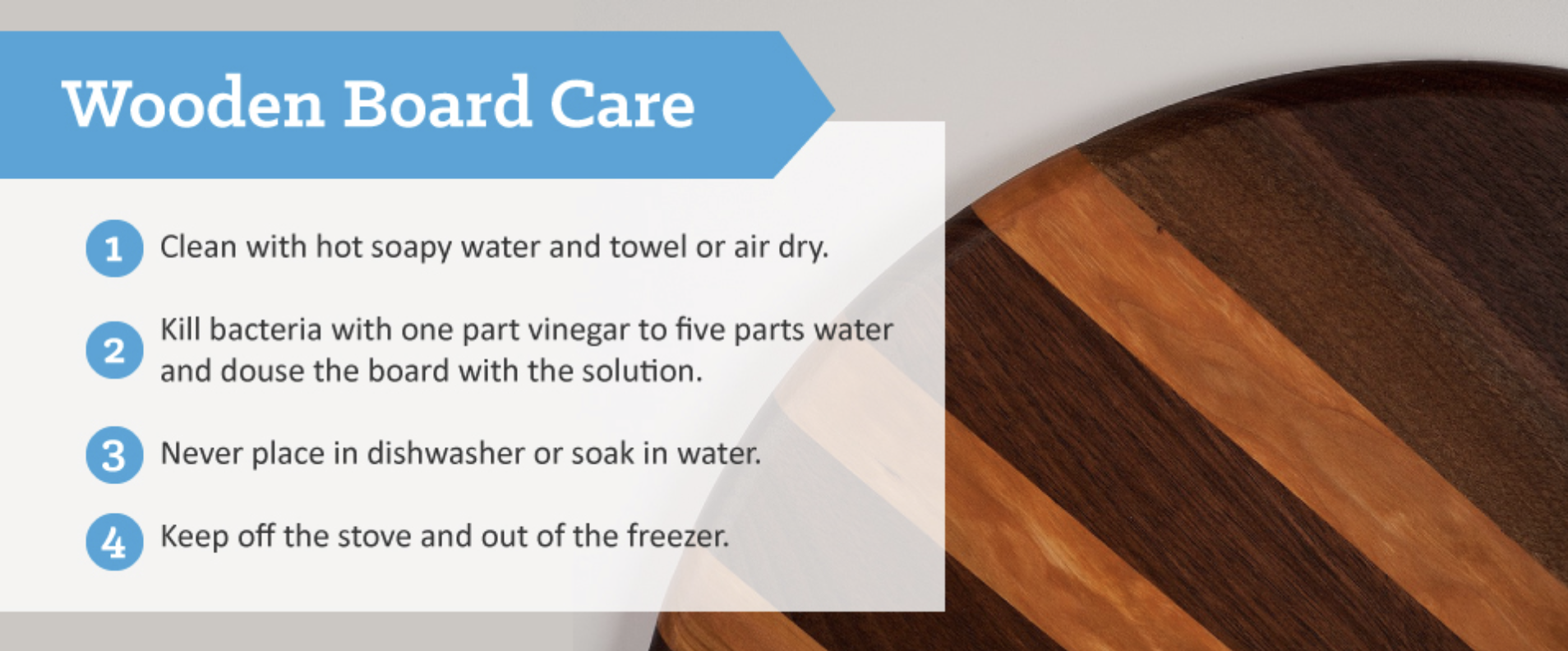
Wash with warm water and mild dish soap
Use a soft brush or cloth to remove food residue
Never soak wood tools or leave them sitting in water
Once clean:
Dry immediately with a towel
Stand boards upright or allow utensils to air-dry fully before storing
Moisture trapped in drawers or stacked boards is one of the fastest ways to damage wood.Why Soaking Is a Problem
Soaking allows water to penetrate deep into the wood fibers, causing swelling, cracking, and eventual splitting. Dishwashers are especially hard on wood, combining heat, water, and prolonged exposure.
If a board does accidentally get soaked, dry it slowly at room temperature — never with direct heat.
Oiling: Nourishment for Your Tools
Wood boards and utensils need regular oiling to stay healthy.
How often to oil:
Every few weeks with regular use
Anytime the surface looks dry, dull, or rough
What to use:
Food-grade mineral oil
Beeswax and oil blends designed for cutting boards
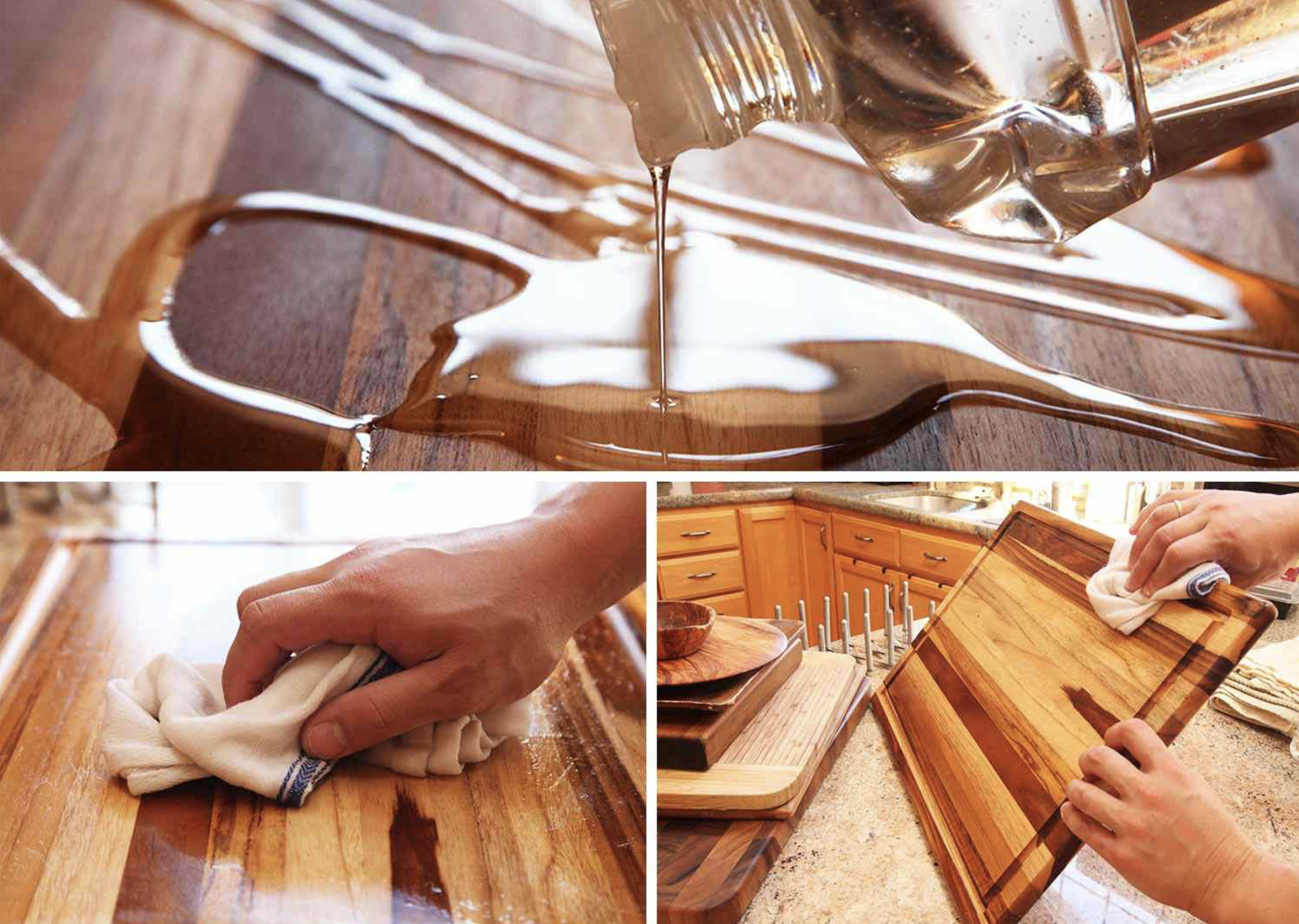
Apply oil generously, let it soak in for several hours (or overnight), then wipe away any excess.
What to avoid:
Cooking oils (olive, avocado, coconut)
These can oxidize and turn rancid, leaving unpleasant odors.Deodorizing NaturallyIf your board absorbs strong smells (onions, garlic, or fish), deodorizing is easy:
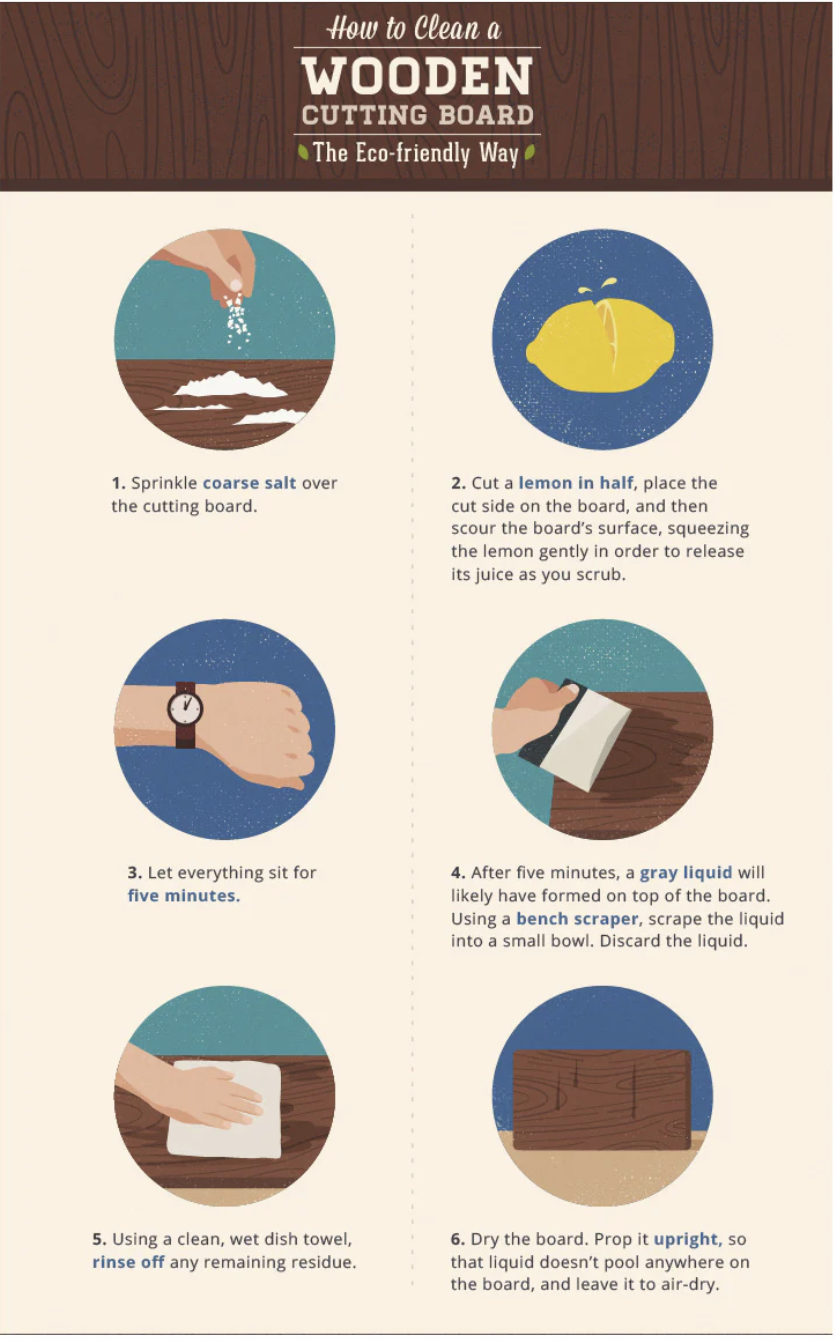
Sprinkle coarse salt over the surface
Rub with half a lemon, squeezing gently as you go
Rinse lightly and dry thoroughly
This method cleans, deodorizes, and gently brightens the wood without damaging it.
Preventing Stains & Wear
Rotate boards so the same side isn’t always used
Use separate boards for meats and produce if desired
Don’t leave acidic foods sitting on wood surfaces
Knife marks are normal and part of a board’s story — deep grooves can be lightly sanded and re-oiled if needed.
A Farm Kitchen Mindset
Wood thrives with nourishment, not neglect — much like soil. When cared for well, wooden tools grow more beautiful with time, developing a soft patina and quiet character that can’t be replicated by anything mass-produced.
Treat them kindly, keep them clean and fed, and they’ll serve your kitchen faithfully for years to come.