Caring for Cast Iron the Old-Fashioned Way
Cast iron has earned its place in the farm kitchen for a reason. It’s sturdy, dependable, and meant to be used often. Unlike many modern pans, cast iron doesn’t wear out with age — it improves. With steady use and simple care, it becomes naturally nonstick, deeply seasoned, and uniquely yours.
Caring for cast iron isn’t about perfection. It’s about consistency, patience, and letting time do its work.
Why Cast Iron Is Different
Cast iron is porous by nature. When seasoned correctly, oil fills those pores and bakes onto the surface, creating a protective layer. Each meal adds to that layer, which is why cast iron pans often look better after years of use than they did when they were new.
This is also why gentle care matters — harsh cleaning strips away the seasoning you’ve worked to build.
Everyday Cleaning (Simple and Sufficient)
After cooking, allow your pan to cool slightly. It should still be warm, but not hot to the touch.
Rinse with warm water
Use a stiff brush, cloth, or non-metal scrubber to remove food
For stuck-on bits, sprinkle coarse salt into the pan and scrub gently
Salt acts as a natural abrasive without damaging the seasoning. It’s especially helpful after frying or baking.Once clean, dry immediately:
Wipe thoroughly with a towel, or
Place the pan over low heat on the stovetop for a minute or two until fully dry
Moisture is the enemy of cast iron — drying is not optional.
Light Oiling After Use (Optional but Helpful)
If your pan looks dry after cleaning:
Rub in a very thin layer of oil while the pan is still warm
Buff off any excess with a clean cloth
The surface should feel dry, not greasy.
This step helps maintain the seasoning between deeper re-seasoning sessions.
When (and How) to Re-Season
Over time, you may notice food sticking more than usual or the surface appearing dull or uneven. That’s your sign it’s time to refresh the seasoning.
To re-season:
Wash and dry the pan completely
Apply a thin, even coat of oil to the entire pan (inside, outside, and handle)
Place the pan upside down on the middle rack of a 400°F oven
Bake for one hour
Turn off the oven and allow the pan to cool completely inside
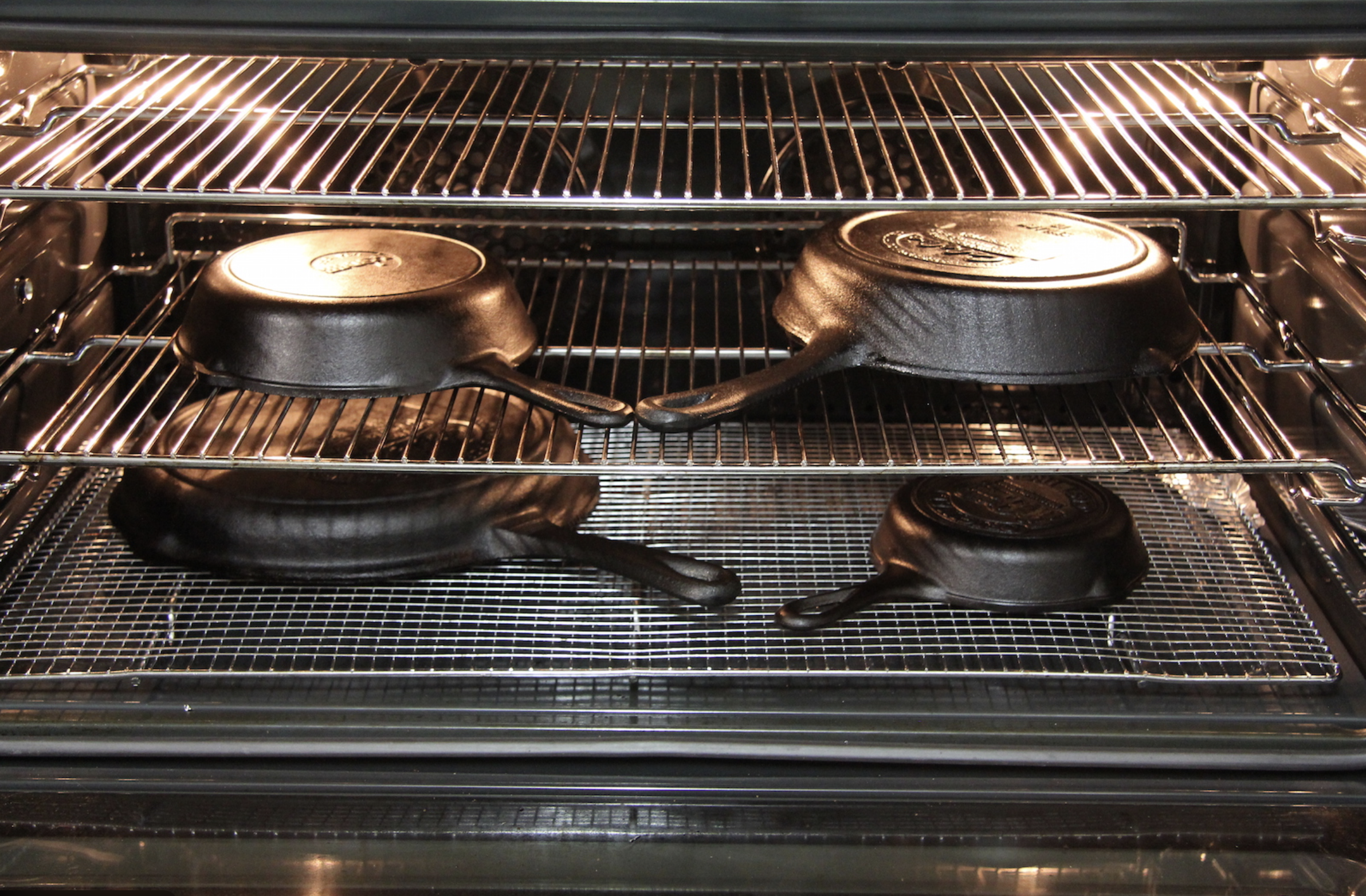
Thin layers are key — too much oil will leave a sticky surface.What to Avoid
To protect your cast iron, avoid the following:
❌ Soaking the pan in water
❌ Running it through the dishwasher
❌ Leaving it wet or storing it damp
❌ Scrubbing with steel wool unless rust is present
❌ Letting acidic foods (tomatoes, vinegar-based sauces) sit in the pan for long periods
Acidic foods are fine for short cooks, but prolonged contact can break down seasoning.
Rust Happens — and That’s Okay
Rust doesn’t mean your pan is ruined.
Scrub rust with steel wool or a stiff brush
Wash, dry thoroughly
Re-season following the steps above
Cast iron is forgiving — almost everything can be fixed with a little patience.
A Farm Kitchen Mindset
Cast iron tells its story slowly. Every meal leaves its mark, and every bit of care adds to its character. Don’t rush the process. Use it often, clean it simply, and trust that time will do the rest.
A well-loved cast iron pan isn’t perfect — it’s faithful.
